Published · Nick Berg
A deck in the Carolinas takes a beating most people don't think about until a few summers in. Long stretches of direct UV, humidity that never really lets up, and the kind of afternoon storms that soak the boards and then bake them dry an hour later. The material you pick up front decides how much of your weekends you'll spend maintaining it later.
Here's how we walk homeowners through the three options we build with most.
Capped composite
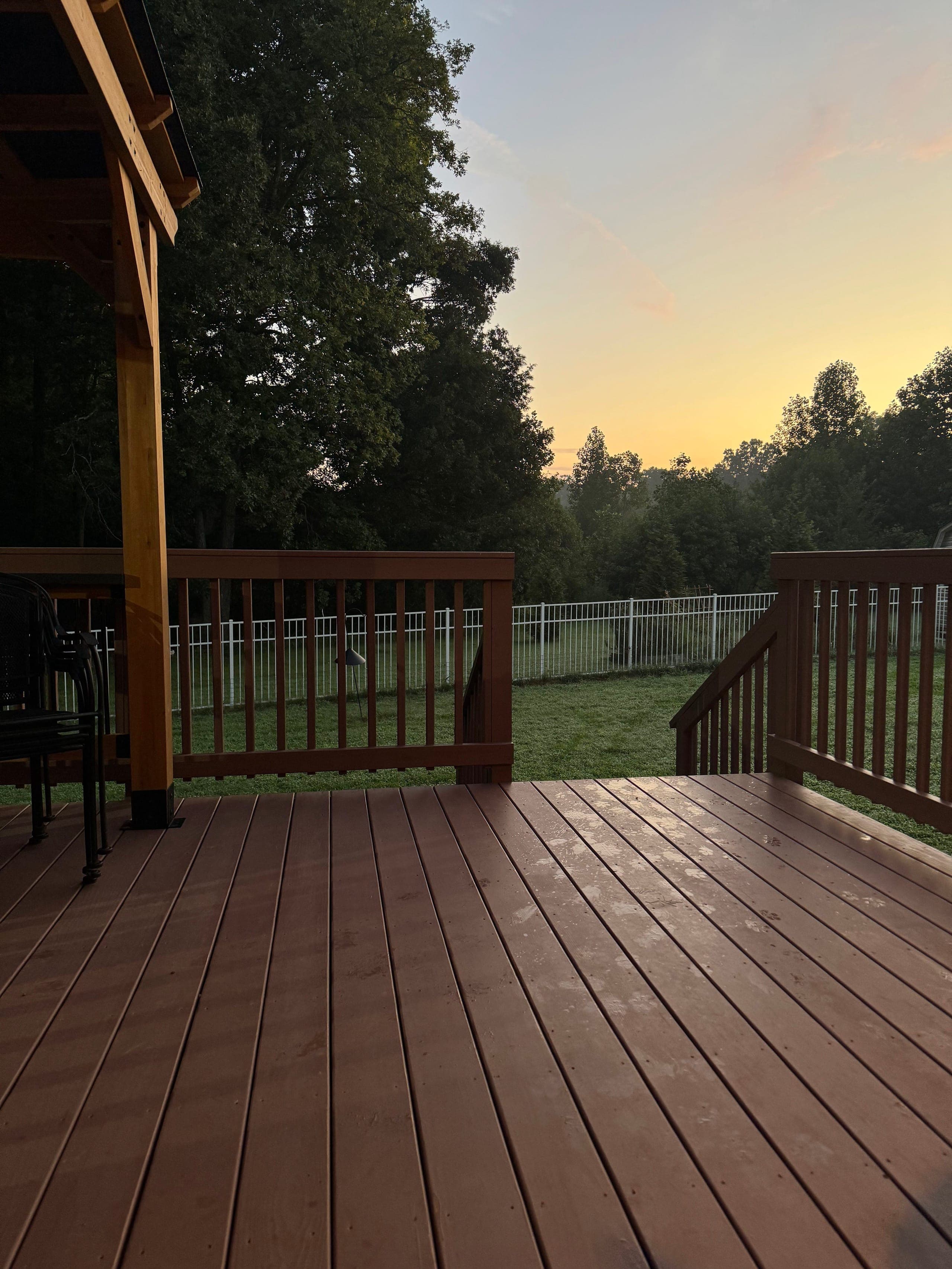
For most of the decks we build in the Charlotte metro, capped composite is the material we reach for first. The polymer shell resists the UV fade and moisture swelling that wear on wood, and it holds its color through the seasons without staining or sealing.
It costs more up front than wood. What you're buying is time — a surface you wash off a couple times a year instead of sanding and re-staining every one to two seasons. On a deck that gets full afternoon sun, that trade usually pays for itself in the years you'd otherwise spend on upkeep.
Cedar
Cedar earns its place when the look matters more than the maintenance math — a pergola, a lattice top, a feature you want to read as natural wood. It's naturally more resistant to rot and insects than untreated lumber, and it takes a stain beautifully.
The honest tradeoff: cedar wants attention. To keep that warm tone in our climate, plan on cleaning and re-sealing it on a regular cycle. We're happy to build in cedar — we just make sure you know what you're signing up for so it still looks good in year five.
Pressure-treated
Pressure-treated pine is the workhorse, and it still has a role. It's cost-effective, it's what most framing is built from underneath any deck surface, and treated correctly it holds up well against rot.
Where we're careful is the visible walking surface. Treated lumber moves as it dries, and in this humidity that can mean checking and warping if it isn't maintained. When a homeowner's budget points here, we're straight about the maintenance it'll need to stay flat and clean.
What actually makes a deck last
Whatever the surface, the deck lasts because of what's underneath and how it's detailed — footings sized and set right, a ledger that's flashed and lag-bolted clean so water can't get behind it, and framing that's built to shed water instead of trap it. We build every deck that way regardless of the board on top, because the boards are the part you see and the structure is the part that fails first when it's cut short.
If you're weighing a new deck and not sure which direction fits your yard and your budget, that's exactly the conversation we like to have in person. Reach out for a free consultation and we'll walk your space and give you a straight recommendation.